Google’s new AI model, ‘Gemini’, shows impressive multi-modal capabilities.
The artificial intelligence landscape just shifted dramatically. Google’s latest release, Gemini, represents more than just another model launch—it’s a fundamental reimagining of how AI systems perceive and interact with the world. As someone who’s spent years at the intersection of technology and finance, building quantitative systems at Savanti Investments, I’ve learned that the most transformative innovations aren’t always the loudest. But Gemini? This one deserves our full attention.
What’s Happening: The Multi-Modal Revolution
Google’s Gemini isn’t just processing text anymore. It’s simultaneously understanding images, audio, video, and code—all within a single, unified architecture. Think of it as the difference between reading a book about a symphony versus actually hearing it performed. The model can analyze a photograph, understand the spoken description of that photo, and generate code to manipulate it—all in one seamless flow.
The technical achievements are staggering. Gemini Ultra, the flagship version, has outperformed GPT-4 on 30 of 32 widely-used academic benchmarks. In MMLU (Massive Multitask Language Understanding), it scored 90.0%—the first model to surpass human expert performance. But numbers only tell part of the story.
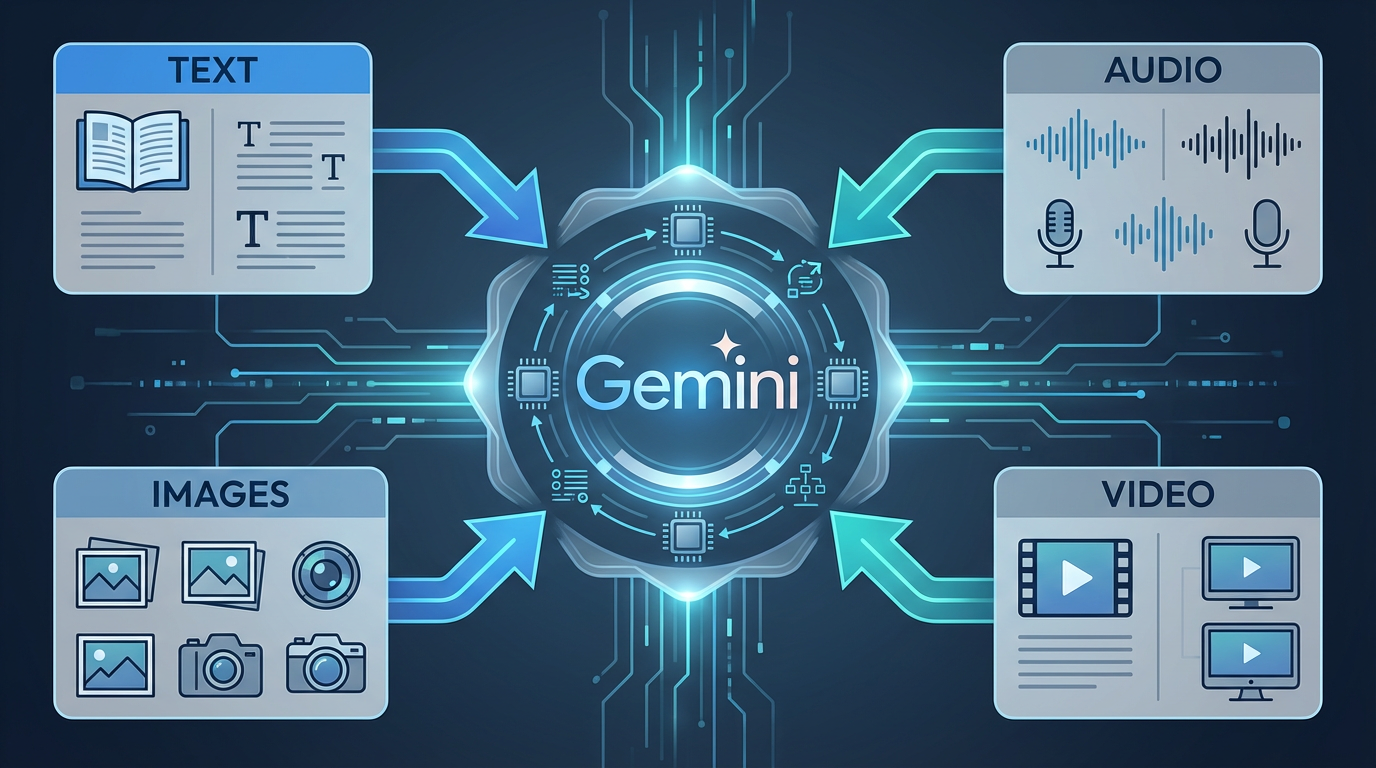
What makes Gemini truly remarkable is its native multi-modality. Unlike previous systems that bolted together separate models for different inputs, Gemini was trained from the ground up to think across modalities. It’s the difference between a translator working with a dictionary versus someone who grew up bilingual. The fluency shows.
Why It Matters: Beyond the Benchmarks
In my work with QuantAI™, our proprietary trading system at Savanti Investments, we’ve seen firsthand how AI capabilities translate into real-world value. The jump from single-modal to multi-modal AI isn’t incremental—it’s exponential. Here’s why:
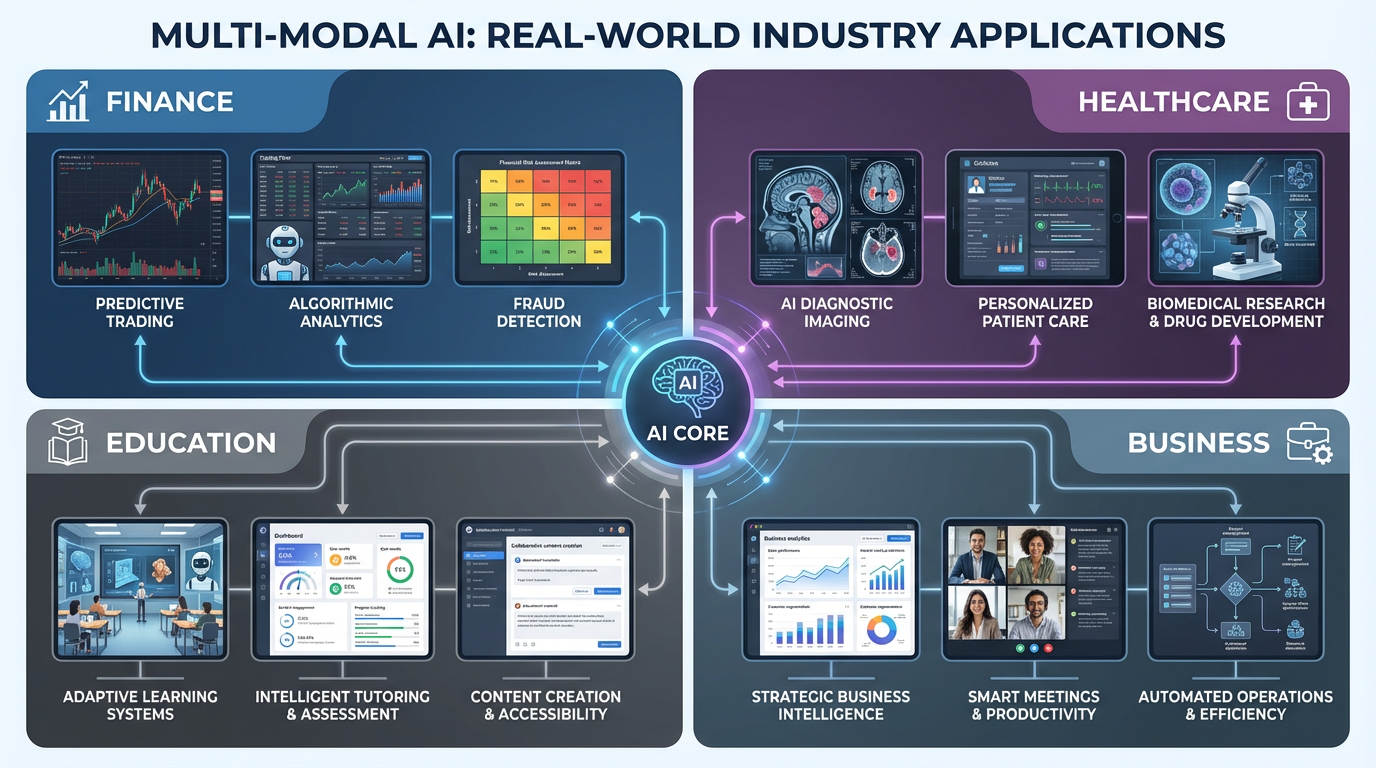
Financial Analysis Gets Richer: Imagine analyzing earnings calls not just by transcribing words, but by reading facial expressions, voice stress patterns, and presentation slides simultaneously. Gemini’s multi-modal capabilities could revolutionize sentiment analysis in trading. When a CFO says “we’re confident” but their body language suggests otherwise, that dissonance becomes tradeable information.
Due Diligence at Scale: Private equity and venture capital firms drown in documents—pitch decks, financial statements, market research, video presentations. A multi-modal AI can synthesize all of these simultaneously, identifying patterns and red flags that would take human analysts weeks to uncover. At Savanti, we’re already exploring how these capabilities could enhance our investment decision-making.
Democratization of Sophisticated Analysis: Tools like SavantTrade™, our AI-powered trading platform, become dramatically more powerful when they can process charts, news articles, social media sentiment, and video commentary all at once. What was once the domain of elite hedge funds becomes accessible to sophisticated individual investors.
Expert Analysis: The Competitive Landscape Shifts
The AI race between Google and OpenAI has always been fascinating, but Gemini changes the dynamics. OpenAI pioneered the large language model revolution with GPT-3 and GPT-4, capturing mindshare and market position. Google, despite inventing the transformer architecture that powers all these models, seemed to be playing catch-up.
Not anymore. Gemini’s multi-modal capabilities give Google a distinct advantage in several areas:
Integration Advantage: Google’s ecosystem—Search, YouTube, Gmail, Google Workspace—provides unparalleled training data across modalities. Gemini can learn from billions of images, videos, and documents in context. That’s a moat that’s hard to replicate.
Infrastructure Edge: Google’s TPU (Tensor Processing Unit) infrastructure was purpose-built for AI workloads. Gemini was optimized for these chips from day one, giving it efficiency advantages that translate to lower costs and faster inference.
Enterprise Readiness: While OpenAI has focused on consumer applications and API access, Google is positioning Gemini for enterprise deployment through Google Cloud. For businesses concerned about data privacy and control, this matters enormously.
But let’s not declare victory prematurely. OpenAI isn’t standing still. The competition between these giants will drive innovation faster than either could achieve alone. As investors and technologists, we’re the beneficiaries of this arms race.
Real-World Implications: Where the Rubber Meets the Road
Theory is elegant, but execution is everything. How will Gemini actually change how we work, invest, and build businesses?
Marketing and Content Creation: At Convirtio, our marketing technology venture, we’re seeing how multi-modal AI transforms content strategy. Gemini can analyze a brand’s visual identity, voice, and messaging across channels, then generate cohesive campaigns that maintain consistency while adapting to each platform’s unique requirements. A single creative brief becomes a coordinated multi-channel campaign—video, images, copy, and interactive elements—all generated and optimized simultaneously.
Healthcare Diagnostics: Medical diagnosis inherently requires multi-modal reasoning. Gemini can analyze medical images, patient history, lab results, and clinical notes together. Early reports suggest it can identify patterns that single-modal systems miss. For healthcare investors, this opens enormous opportunities in AI-assisted diagnostics and personalized medicine.
Education and Training: Imagine a tutor that can watch you solve a math problem, listen to your explanation, read your written work, and provide feedback that addresses not just what you got wrong, but why you got it wrong. Gemini makes this possible at scale. The implications for educational technology are profound.
Regulatory Compliance: Financial institutions spend billions on compliance. Multi-modal AI can monitor trading communications across email, chat, voice calls, and video conferences simultaneously, flagging potential violations in real-time. It’s not just about catching bad actors—it’s about creating systems that make compliance seamless and automatic.
The Risks We Can’t Ignore
Innovation without wisdom is dangerous, and multi-modal AI amplifies both capabilities and risks. As someone who’s navigated regulatory frameworks in finance, I’m acutely aware that powerful tools require robust guardrails.
Deepfakes and Misinformation: A system that understands and generates across modalities can create incredibly convincing fake content. Imagine a fabricated video of a CEO announcing bankruptcy, complete with realistic voice, expressions, and body language. The market manipulation potential is terrifying.
Privacy Concerns: Multi-modal AI can infer far more about individuals than single-modal systems. Analyzing someone’s photos, voice patterns, and writing style together creates a detailed psychological profile. The surveillance implications demand serious ethical consideration.
Bias Amplification: If training data contains biases across multiple modalities, the model can learn and amplify those biases in subtle ways. A hiring AI that considers resumes, video interviews, and voice patterns might perpetuate discrimination in ways that are harder to detect and audit.
Economic Disruption: Jobs that require multi-modal reasoning—analysts, diagnosticians, content creators—face automation pressure. While new opportunities will emerge, the transition will be painful for many. As investors and business leaders, we have a responsibility to consider these human costs.
Future Outlook: Where Do We Go From Here?
Standing at this inflection point, I see several trajectories unfolding:
The Modality Expansion Continues: Today it’s text, images, audio, and video. Tomorrow? Sensor data, biometrics, spatial computing inputs from AR/VR devices. The definition of “multi-modal” will keep expanding. At Savanti Investments, we’re positioning our portfolio to capture this expansion.
Specialized Multi-Modal Models Emerge: While Gemini is a generalist, we’ll see domain-specific multi-modal models optimized for finance, healthcare, legal work, and other verticals. These specialized models will outperform generalists in their niches, creating investment opportunities in vertical AI companies.
The Infrastructure Layer Matures: Running multi-modal models requires enormous computational resources. Companies that provide the picks and shovels—specialized chips, efficient inference engines, model optimization tools—will capture significant value. This is where QuantAI™ principles apply: look for the infrastructure plays, not just the application layer.
Regulatory Frameworks Evolve: Governments will struggle to keep pace, but regulation is coming. The EU’s AI Act is just the beginning. Companies that proactively build ethical AI practices will have competitive advantages when regulations tighten. At Savanti, we’re already incorporating AI governance into our investment due diligence.
Human-AI Collaboration Deepens: The future isn’t AI replacing humans—it’s AI augmenting human capabilities in ways we’re only beginning to imagine. The most successful businesses will be those that figure out the optimal human-AI division of labor. This is where tools like SavantTrade™ come in: not replacing traders, but giving them superhuman analytical capabilities.
The Bottom Line
Google’s Gemini represents a genuine leap forward in artificial intelligence. Its multi-modal capabilities aren’t just technically impressive—they’re practically transformative. From financial analysis to healthcare diagnostics, from content creation to regulatory compliance, the applications are vast and valuable.
But technology alone doesn’t create value. It’s how we deploy it, govern it, and integrate it into human workflows that matters. As investors, we need to look beyond the hype and identify companies that are building sustainable competitive advantages with these tools. As business leaders, we need to experiment aggressively while managing risks responsibly. As citizens, we need to demand that these powerful systems serve human flourishing, not just corporate profits.
The multi-modal AI revolution is here. The question isn’t whether it will transform industries—it will. The question is whether we’ll shape that transformation wisely. At Savanti Investments, we’re betting on the builders who are doing exactly that: combining cutting-edge AI capabilities with deep domain expertise and ethical frameworks.
The future is multi-modal. And it’s arriving faster than most people realize.
What are your thoughts on multi-modal AI? How do you see it impacting your industry? I’d love to hear your perspective.