The Future of Decentralized Derivatives: Beyond Perpetual Swaps
Disclaimer: This article is for educational and informational purposes only and is not investment advice. The content discusses emerging financial technologies and should not be construed as a recommendation to buy, sell, or hold any financial instrument. Please consult with a qualified financial advisor before making investment decisions.

The Next Evolution in DeFi Finance
In the world of decentralized finance, perpetual swaps have dominated the derivatives landscape for the past few years. Platforms like dYdX, GMX, and Hyperliquid have proven that on-chain derivatives can achieve meaningful liquidity and trading volumes. But as we move into 2026, a new wave of innovation is emerging—one that goes far beyond the perpetual swap model that has defined DeFi derivatives to date.
The question isn’t whether decentralized derivatives will continue to grow. The question is: what comes next? And more importantly, how will these innovations reshape not just crypto markets, but the broader financial system?
At Savanti Investments, we’ve been tracking these developments closely through our QuantAI™ platform, which analyzes on-chain data and market microstructure across both centralized and decentralized venues. What we’re seeing is a fundamental shift in how derivatives are being designed, traded, and settled in decentralized environments.
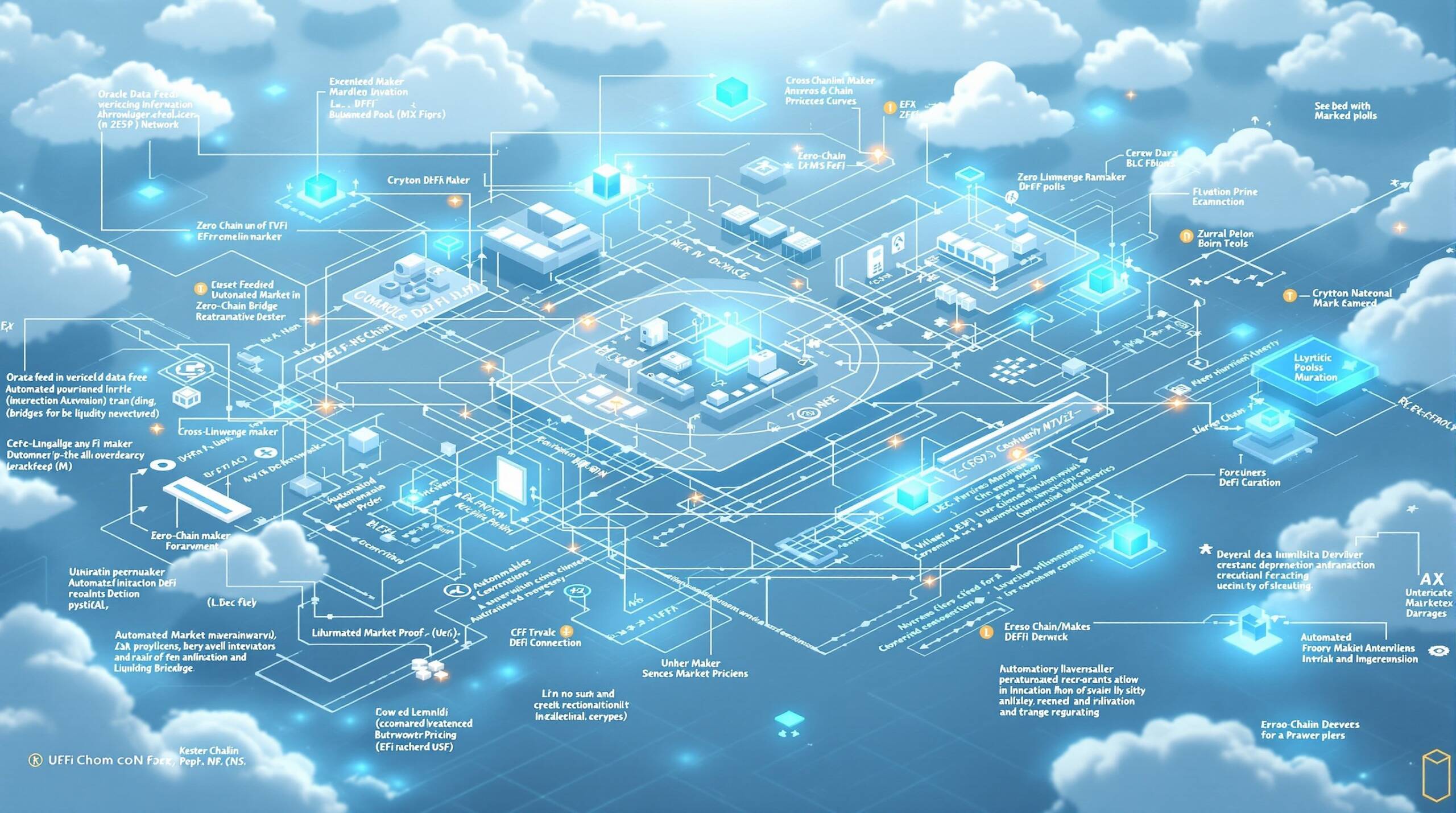
What’s Happening: Beyond Perpetual Swaps
Perpetual swaps—futures contracts without expiration dates—have been the workhorse of DeFi derivatives. They’re simple, capital-efficient, and familiar to traders from centralized exchanges. But they represent just one small corner of the vast derivatives universe.
Recent developments show a clear trend toward more sophisticated derivative products:
- Options protocols like Lyra, Aevo, and Panoptic are bringing European and American-style options on-chain with improved capital efficiency and automated market making
- Structured products are emerging that combine multiple derivative instruments into single tradeable tokens—think principal-protected notes or yield-enhanced strategies
- Exotic derivatives including variance swaps, volatility products, and correlation trades are being deployed on protocols like Voltz and Thales
- Real-world asset (RWA) derivatives are enabling on-chain exposure to commodities, interest rates, and even weather derivatives
- Intent-based trading systems are abstracting away the complexity of derivative execution, allowing users to express desired outcomes rather than specific trades
The numbers tell the story. While perpetual swap volumes on decentralized exchanges reached approximately $2 trillion in 2025, options and other derivative products are growing at 3-4x that rate from a smaller base. More importantly, institutional interest is accelerating—a sign that these products are maturing beyond retail speculation.
Why It Matters: The Technology Drivers
This expansion beyond perpetual swaps isn’t happening in a vacuum. Several key technological developments are making it possible:
1. Oracle Infrastructure
Derivatives require reliable price feeds, and the oracle infrastructure has matured significantly. Chainlink, Pyth, and other oracle networks now provide sub-second price updates with cryptographic guarantees of data integrity. This enables more complex derivatives that require multiple price feeds, volatility calculations, and correlation data.
2. Cross-Chain Interoperability
Layer-2 solutions and cross-chain bridges have reduced the friction of moving assets between chains. This matters for derivatives because it allows traders to post collateral on one chain while trading derivatives on another, dramatically improving capital efficiency.
3. Zero-Knowledge Proofs
ZK technology is enabling privacy-preserving derivatives trading. Institutional traders can now execute large derivative positions without revealing their strategies to front-runners or competitors—a critical requirement for professional trading operations.
4. Automated Market Makers (AMMs) 2.0
The next generation of AMMs uses concentrated liquidity, dynamic fees, and sophisticated pricing models that can handle the complexity of options and exotic derivatives. Protocols like Uniswap v4 and Maverick are pushing the boundaries of what’s possible with automated market making.
At Savanti, our SavantTrade™ execution platform has been integrating with these new protocols, and we’re seeing execution quality that rivals—and in some cases exceeds—traditional centralized venues, particularly for larger block trades where on-chain transparency actually reduces information asymmetry.
The Regulatory Landscape: Walking a Tightrope
Of course, innovation in financial derivatives doesn’t happen in a regulatory vacuum. The regulatory landscape for DeFi derivatives remains one of the biggest uncertainties—and opportunities—in this space.
In the United States, the CFTC has taken the position that many DeFi derivatives fall under its jurisdiction as swaps or futures. Recent enforcement actions against protocols like Opyn and dYdX have made it clear that “decentralized” doesn’t mean “unregulated.” The SEC, meanwhile, has focused on whether certain derivative tokens constitute securities.
Internationally, the picture is more varied:
- The EU’s MiCA regulation provides some clarity for crypto derivatives, though many questions remain about how it applies to fully decentralized protocols
- Singapore and Hong Kong are taking a more permissive approach, creating regulatory sandboxes for DeFi derivatives with appropriate investor protections
- The UK is exploring a “same risk, same regulation” framework that would apply existing derivatives rules to DeFi products
The key insight here is that regulatory clarity—even if it comes with compliance costs—is actually bullish for institutional adoption. Professional traders and asset managers need legal certainty before they can allocate significant capital to these markets.
Real-World Implications: Who Benefits?
The expansion of decentralized derivatives has profound implications across multiple stakeholder groups:
For Traders and Investors
More derivative products mean better risk management tools. A farmer in Brazil can hedge commodity price risk without going through a traditional broker. A crypto holder can generate yield by selling covered calls. A macro trader can express views on interest rate differentials across different blockchain ecosystems.
For Institutions
The transparency and composability of on-chain derivatives are attractive to institutional players. Smart contracts eliminate counterparty risk (assuming proper auditing). Settlement is instant and atomic. And the ability to build complex strategies by composing different protocols opens up new alpha opportunities.
Through our work with Convirtio, our marketing technology platform, we’ve seen growing interest from traditional finance firms exploring how to integrate DeFi derivatives into their existing workflows. The question has shifted from “if” to “how” and “when.”
For the Broader Financial System
Perhaps most importantly, decentralized derivatives have the potential to democratize access to sophisticated financial instruments. Historically, exotic derivatives and structured products have been the domain of institutional investors with millions in capital. On-chain protocols can fractionalize these products, making them accessible to retail investors with appropriate risk disclosures.
The Risks: What Could Go Wrong?
For all the promise, decentralized derivatives come with significant risks that can’t be ignored:
Smart Contract Risk
Every derivative protocol is only as secure as its underlying smart contracts. We’ve seen multiple high-profile exploits in DeFi, and derivatives protocols—with their complex logic and large amounts of locked capital—are attractive targets for hackers. Rigorous auditing and formal verification are essential, but not foolproof.
Liquidity Fragmentation
Unlike traditional markets with centralized order books, DeFi derivatives are spread across dozens of protocols and chains. This fragmentation can lead to poor execution, wide bid-ask spreads, and difficulty unwinding large positions. Aggregators and cross-chain protocols are helping, but it remains a challenge.
Oracle Manipulation
Derivatives are only as good as their price feeds. Oracle manipulation—where attackers exploit vulnerabilities in price feed mechanisms—has been a recurring problem in DeFi. As derivative products become more complex, the attack surface for oracle manipulation grows.
Regulatory Crackdown
The biggest risk may be regulatory. If major jurisdictions decide to ban or severely restrict DeFi derivatives, it could stifle innovation and drive activity to less regulated jurisdictions. The recent enforcement actions suggest regulators are paying close attention.
Systemic Risk
As DeFi derivatives grow in size and complexity, they could pose systemic risks to the broader crypto ecosystem. Highly leveraged positions, interconnected protocols, and cascading liquidations could trigger market-wide disruptions—similar to what we’ve seen in traditional finance during crises.
Future Outlook: Where Are We Headed?
Looking ahead to the next 1-3 years, several trends seem likely to shape the future of decentralized derivatives:
1. Convergence with Traditional Finance
We’ll see increasing integration between DeFi derivatives and traditional financial infrastructure. Tokenized treasuries, on-chain interest rate swaps, and blockchain-based clearing and settlement for traditional derivatives are all on the horizon. The line between “DeFi” and “TradFi” will blur.
2. AI-Powered Derivative Strategies
The transparency of on-chain data makes it ideal for machine learning models. We’re already seeing AI-powered trading strategies that can analyze on-chain order flow, liquidity patterns, and cross-protocol arbitrage opportunities in real-time. At Savanti, our QuantAI™ platform is at the forefront of this convergence between AI and DeFi derivatives.
3. Institutional Adoption Accelerates
As regulatory clarity improves and infrastructure matures, institutional capital will flow into DeFi derivatives. We’re likely to see major banks and asset managers launching their own on-chain derivative products or partnering with existing protocols.
4. New Asset Classes
The real innovation will come from derivatives on entirely new asset classes that only exist on-chain: governance token volatility, NFT floor price options, DAO treasury yield swaps, and derivatives on AI model performance metrics. These are products that couldn’t exist in traditional finance.
5. Regulatory Frameworks Emerge
By 2027-2028, we’ll likely have clearer regulatory frameworks in major jurisdictions. Some protocols will embrace compliance and KYC/AML requirements to access institutional capital. Others will remain permissionless and pseudonymous, serving different market segments.
Conclusion: Beyond the Hype
The future of decentralized derivatives extends far beyond perpetual swaps. We’re witnessing the early stages of a fundamental transformation in how financial risk is priced, traded, and managed. The technology is maturing, the use cases are expanding, and institutional interest is growing.
But this isn’t a story of inevitable triumph. Significant challenges remain—technical, regulatory, and operational. The protocols that succeed will be those that balance innovation with security, accessibility with compliance, and decentralization with usability.
At Savanti Investments, we’re not just observing this evolution—we’re actively participating in it. Through our quantitative trading strategies, our technology platforms, and our research, we’re helping to shape the future of decentralized finance. The derivatives market is one of the largest in traditional finance, measured in the hundreds of trillions of dollars. If even a fraction of that activity migrates on-chain, the implications will be profound.
The question isn’t whether decentralized derivatives will grow beyond perpetual swaps. The question is how quickly, and who will be positioned to benefit from that growth. For investors, traders, and institutions willing to navigate the complexity and risk, the opportunities are substantial.
The future of finance is being built on-chain, one derivative at a time.
Important Disclosure: This article discusses emerging financial technologies and derivative instruments that involve substantial risk, including the potential loss of principal. Decentralized finance protocols are experimental and may contain bugs, vulnerabilities, or regulatory uncertainties. Past performance is not indicative of future results. This content is provided for informational purposes only and does not constitute an offer to sell or a solicitation of an offer to buy any securities or investment products. Savanti Investments is a private investment fund available only to accredited investors pursuant to Regulation D, Rule 506(c) of the Securities Act of 1933. Any investment in Savanti Investments involves significant risks and is suitable only for sophisticated investors who can afford to lose their entire investment. For more information about our investment strategies and risk factors, please contact us directly.